Specialist Advice for Builders and DIY Deck Installers
Why You Shouldn’t Cut Composite
Decking with a Drop Saw
Learn why cutting composite decking boards one by one on a drop saw can lead to inconsistent board lengths. Understanding how composite decking reacts to temperature helps achieve cleaner cuts and a more consistent finish when installing a composite deck.
Composite Decking Expands and Contracts with Temperature
Composite decking is designed for outdoor conditions, but like most building materials it expands and contracts with changes in temperature.
This is a normal characteristic of composite decking used across Australia, particularly in warm climates such as Queensland and the Sunshine Coast.
When composite boards are stacked together before installation, boards in the middle of the stack can retain heat differently from boards exposed to the air. These small temperature differences can slightly affect board length.
Even minor expansion or contraction can influence the accuracy of cuts during installation.
Why Cutting Composite Decking with a Drop Saw Can Cause
Problems
Drop saws are commonly used on building sites, but cutting composite decking boards individually can sometimes create small variations in board length.
As boards warm or cool during the day, each board may expand or contract slightly before it is cut. If boards are cut one by one under different temperature conditions, the finished lengths may not line up perfectly once installed.
While the differences are often small, they can become noticeable when boards meet across the same deck line. Installers may then need to trim boards again to achieve a consistent finish.
A More Accurate Way to Cut Composite Decking Boards
Achieving clean and consistent cuts starts with controlling the conditions before cutting begins.
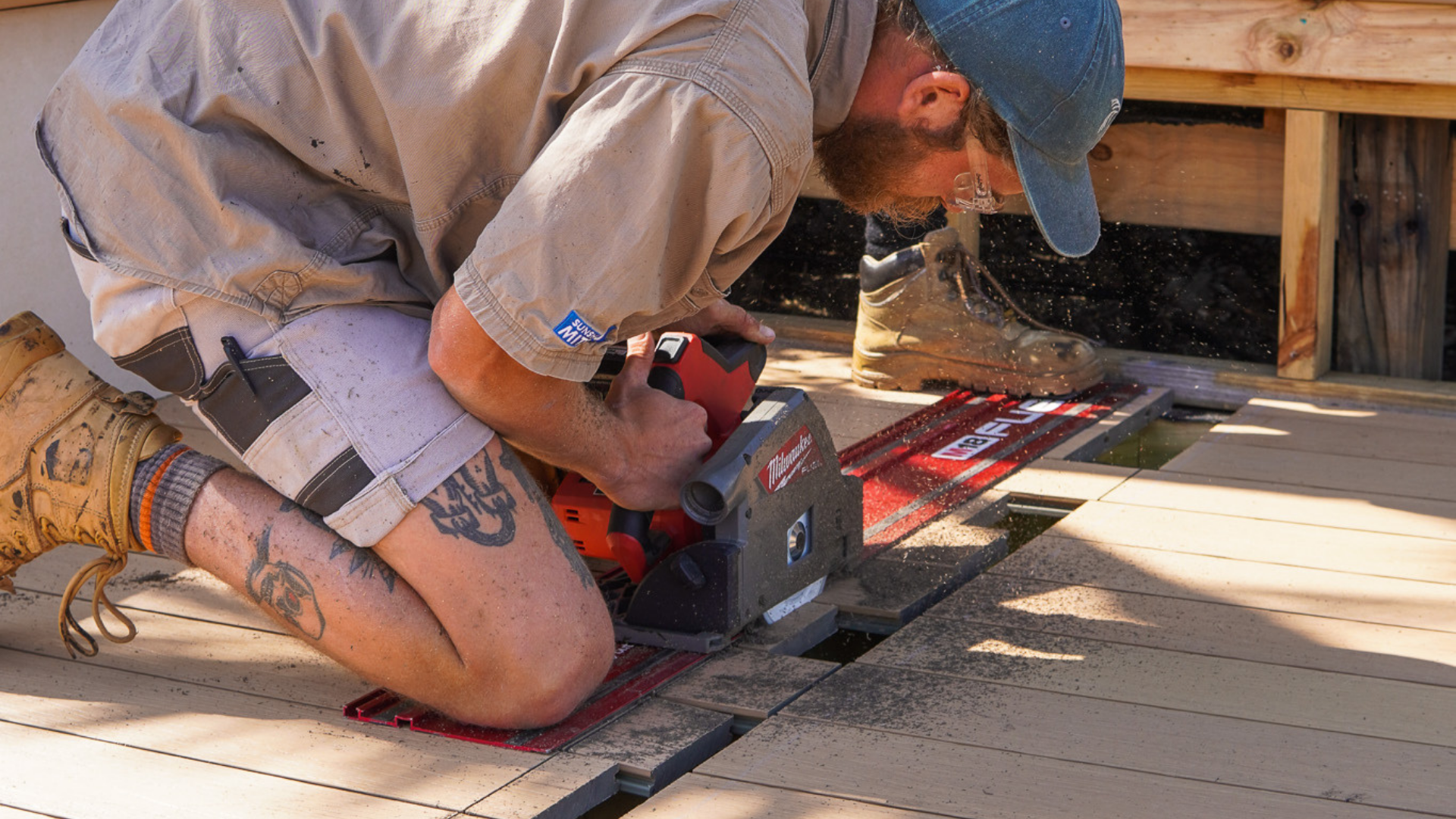
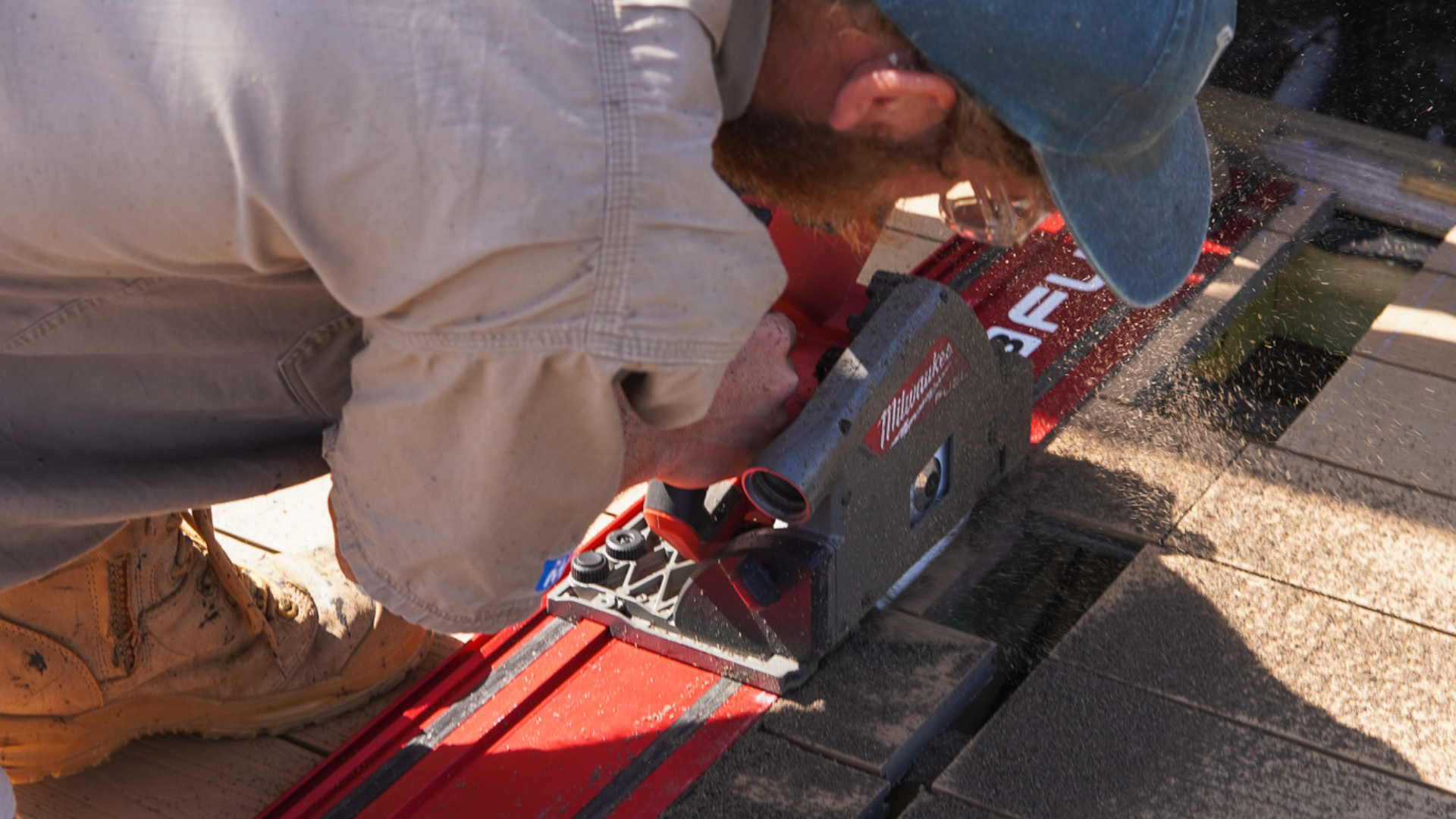
Before cutting composite decking boards, we allow the boards to settle so they reach the same temperature. Once the boards are stable, we establish a straight reference line and make one controlled pass using a track saw.
Cutting the boards together in a single pass helps maintain consistent board lengths and produces a cleaner finish across the deck.
This method helps reduce alignment issues and improves the overall appearance of the finished composite deck.
Tools That Help Achieve a Clean Composite Decking Cut
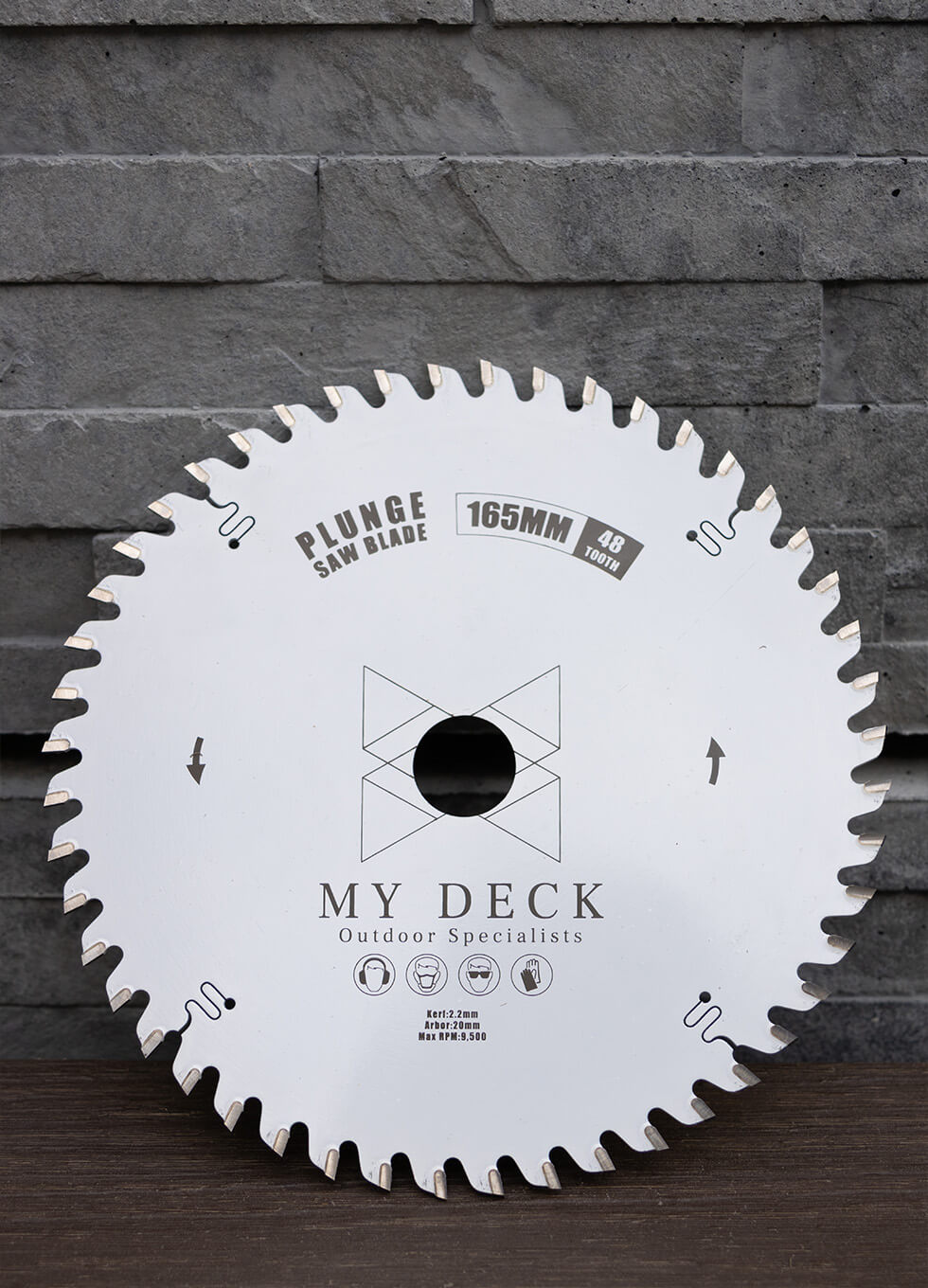
A sharp and reliable blade is just as important as the cutting method. When cutting composite decking boards regularly across different materials, the blade must remain sharp and stable to maintain accuracy. The blade we use on site is part of the My Deck range, designed to deliver consistent cuts across composite and other building materials.
A clean cut starts with a blade that holds its edge and performs reliably throughout the job.
If you want to use the same blade we run on site, you can find it in our webshop.
The blade we recommend for cutting composite is the Plunge Saw as it has a thick kerf.